







Last updated: April 17, 2026
Seedance 2.0 Fast vs Kling O3: Which Should You Use?
This comes down to one question: does your ad feature objects in motion, or people on camera?
Seedance 2.0 Fast scores 8.2 average quality — Kling edges ahead at 8.4. Seedance wins motion & pacing (9.0 vs 8.5), product shots (8.5 vs 8.0), visual quality (8.5 vs 8.0), and ties on scene consistency (8.5). If your ad features object action, product-in-use shots, physics-driven interaction, or needs multi-shot continuity for environments and objects across a 30+ second narrative, Seedance is the stronger pick. Its Megaton physics benchmark lead of +31.7 points over Seedance 1.5 is the largest jump any AI video model posted in 2026.
Kling O3 scores 8.0 total — above Seedance's 7.5 — and owns the two metrics that define UGC performance: human realism (9.0 vs 7.0) and prompt accuracy (8.5 vs 7.5). For talking heads, single-person testimonials, AI influencer content, and any format where the whole ad is a face on camera, Kling produces noticeably more natural micro-expressions and lip sync. Kling also handles multi-person scenes reliably where Seedance tends to produce clone-like duplicates. It is also cheaper at 9 credits per second versus Seedance's 10.
Many ad teams use both: Seedance for motion-heavy object segments (the product reveal, the action hook, the demo) and Kling for any person-to-camera or multi-person segment (the voiceover spokesperson, the testimonial, the group shot). Stitch clips from each in post-production.
Where Seedance 2.0 Fast Wins
Motion & pacing (9.0 vs 8.5): Seedance's signature advantage. Weight, gravity, collision, and object motion all render with a level of physical coherence no other model matches. Action sequences, sports, driving, unboxing — anywhere physics matters, Seedance pulls ahead.
Visual quality (8.5 vs 8.0): Sharper textures, more accurate color reproduction, stronger lighting coherence. Close-ups on products, hands, or materials show more detail on Seedance.
Product shots (8.5 vs 8.0): Seedance renders static product frames with slightly more surface and material detail than Kling. Its @mention reference system (9 images, 3 videos, 3 audio clips per generation) also gives the most granular compositional control of any video model on the market.
Clip length (15s vs 8s max): Nearly double the maximum length, which changes what is possible in a single generation — full object-motion arcs instead of fragments.
Scene consistency (tied at 8.5): Both models hold environment and object continuity across shots well. The tie means multi-shot stitching works on either — but Seedance's longer 15-second clips make fewer cuts necessary in the first place.
Where Kling O3 Wins
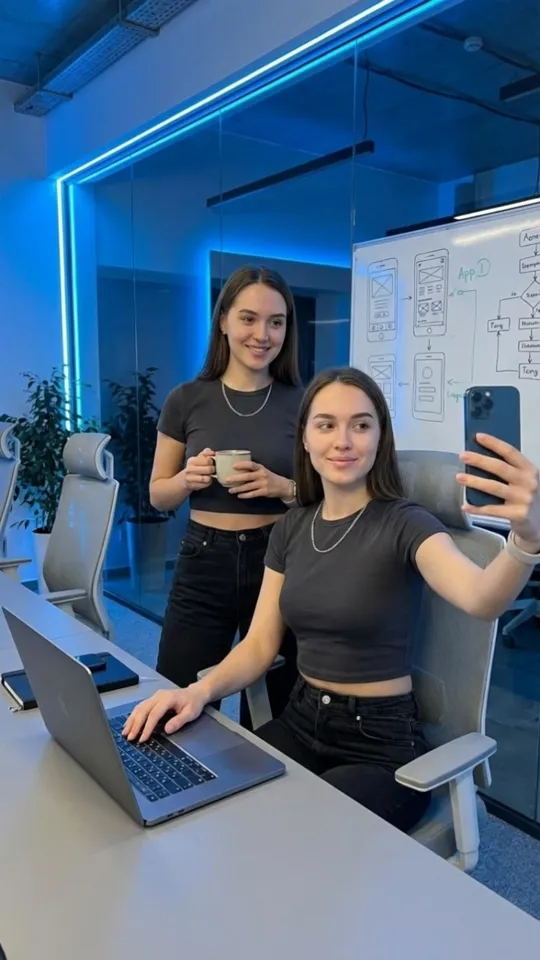
Human realism (9.0 vs 7.0): The highest human realism score we benchmarked — 2 full points above Seedance. Facial micro-expressions, lip sync accuracy, and skin texture all read much more naturally on Kling. For UGC-style talking head ads — the dominant paid-ad format on TikTok and Reels — this gap is the largest single predictor of which model produces a converting creative.
Photoreal human rendering: Seedance's human generation has a strong style bias toward cartoon/stylized output. Even when you prompt for a photorealistic person, the model frequently outputs an animated-looking face instead of a real one. Kling produces photoreal faces consistently. For any ad where the person needs to look real rather than animated, this is a dealbreaker against Seedance.
Prompt accuracy (8.5 vs 7.5): Kling follows complex multi-part prompts more faithfully than Seedance at this stage. For ads with detailed scene instructions, specific camera moves, or layered staging, Kling produces more predictable output on the first pass.
Cost per second (9 vs 10 credits): 10% cheaper. For a 6-second clip: 54 credits on Kling vs 60 on Seedance. Across 50 clips that is 300 credits saved — meaningful when you are iterating on person-driven content.
Total score (8.0 vs 7.5): Kling edges ahead on total — it wins quality average (8.4 vs 8.2) AND is cheaper per second. If you are optimizing for overall score, Kling is the stronger pick unless your ad is strictly motion-driven.
Pricing Comparison
| Metric | Seedance 2.0 Fast | Kling O3 |
|---|---|---|
| Cost per second | 10 credits | 9 credits |
| 6-second clip | 60 credits | 54 credits |
| 10 clips | 600 credits | 540 credits |
| 50 clips | 3,000 credits | 2,700 credits |
Kling O3 is 10% cheaper at every volume. For high-volume A/B testing, the difference adds up. But for hero creatives where 2-3 final generations are all you need, the 6-credit gap on a 6-second clip is small enough that quality fit for your ad format should drive the decision, not cost.
Frequently Asked Questions
Is Seedance 2.0 Fast better than Kling O3?
On quality average, Kling edges ahead (8.4 vs 8.2). Seedance 2.0 Fast wins 3 of 6 quality metrics (motion, product shots, visual quality), ties on scene consistency (8.5), and loses human realism and prompt accuracy. On total score including cost and speed, Kling wins more clearly (8.0 vs 7.5) because it is cheaper and stronger on people. The pick depends on ad format: Seedance wins anything motion- and object-driven, Kling wins anything person-driven.
Which model is better for talking head ads?
Kling O3. Its 9.0/10 human realism score is the highest we benchmarked — Seedance 2.0 Fast comes in at 7.0, a full 2-point gap. The bigger issue with Seedance is style bias: even when you prompt for a photorealistic person, the model often outputs a cartoon/stylized face instead. For selfie-style UGC, testimonials, and AI influencer content that needs to look real, Kling is the only reliable pick. Kling is also cheaper at 9 vs 10 credits/sec.
Which model is better for motion-driven ads?
Seedance 2.0 Fast. It scores 9.0 on motion & pacing vs Kling's 8.5, and ties at 8.5 on scene consistency. The gap is most visible in action sequences, object-centric product demos, and physics-heavy shots where objects need weight, gravity, and realistic contact. Seedance's +31.7 point Megaton physics benchmark lead is real, not marketing. Avoid it whenever a photoreal person is the subject — the model's human rendering defaults to a cartoon/stylized look.
Which model is cheaper?
Kling O3 at 9 credits per second vs Seedance 2.0 Fast at 10 credits per second. For ten 6-second clips: Kling costs 540 credits, Seedance costs 600 credits — about 11% more. The cost difference is small enough that quality fit for your ad format (motion vs people) should drive the decision, not cost.
Can I use both models together?
Yes — and many advertisers do. Use Kling O3 for talking-head segments where a spokesperson delivers the hook or CTA. Use Seedance 2.0 Fast for action, product-in-use, and multi-subject segments where motion physics matters. Stitch clips from both in post-production (CapCut or your editor). Different APIs (Kuaishou vs ByteDance), but both accept similar text prompts.
How do clip lengths compare?
Seedance 2.0 Fast supports 4 to 15 second clips — significantly longer than Kling O3's 4-8 seconds. For long-form narrative ads (30-60 seconds), Seedance's longer clips plus its 8.5 scene consistency make stitching seamless sequences much easier for object-and-environment shots. Kling requires more clips and more careful matching for the same total length.
How do generation speeds compare?
Kling is slightly faster: 7.5/10 generation speed vs Seedance's 7.0. Typical generation time for a 6-second clip is 2-3 minutes on both models. Neither is built for the fastest possible iteration; for speed-focused workflows look at Veo 3.1 Lite (8.5) or LTX 2.3 Pro (9.0).
Seedance 2.0 Fast vs Kling O3 — which for TikTok ads?
Depends on the format. For UGC selfie-style TikToks — the dominant ad format on the platform — Kling O3 is the better pick thanks to its 9.0 human realism. For motion-heavy TikToks (product demos, dance, sports, action hooks), Seedance 2.0 Fast's physics advantage produces more believable output. Both generate native 9:16 vertical video at 1080p.
More Model Comparisons
Head-to-head comparisons of AI video models for ad production.
Veo 3.1 Lite vs Kling O3
Budget speed vs human realism. Scores, videos, and use-case verdicts.
Veo 3.1 Lite vs Veo 3.1 Fast
Same Google ecosystem, different trade-offs. Quality vs cost and speed.
Veo 3.1 Lite vs LTX 2.3 Pro
The two most affordable AI video models compared head-to-head.
Veo 3.1 Fast vs Kling O3
Two premium models — photorealism vs human realism.
Veo 3.1 Fast vs LTX 2.3 Pro
Premium quality vs budget speed. Opposite trade-offs for ad production.
Kling O3 vs LTX 2.3 Pro
Premium human realism vs budget speed. The widest quality gap.
Seedance 2.0 Fast vs Veo 3.1 Fast
10 vs 11 credits — ByteDance's motion vs Google's faces at the premium tier.
Seedance 2.0 Fast vs LTX 2.3 Pro
Premium quality vs budget speed. The widest quality gap in our video lineup.
Seedance 2.0 Fast vs Veo 3.1 Lite
Premium quality vs budget volume. Opposite trade-offs for different production phases.
Nano Banana Pro vs Nano Banana 2
Google's two AI image models — premium quality vs fast generation.
Nano Banana Pro vs Seedream v4.5
Premium Google quality vs ByteDance budget value.
Nano Banana 2 vs Seedream v4.5
Two budget image models — speed vs cost.

GPT Image 2 vs Nano Banana Pro
The two top-scoring premium image models — perfect text vs polished composition.
GPT Image 2 vs Nano Banana 2
Same 6-credit price — quality leader vs speed leader.
GPT Image 2 vs Seedream v4.5
The highest-scoring image model vs the cheapest — hero creatives vs catalog scale.