







Last updated: April 15, 2026
Kling O3 vs LTX 2.3 Pro: Which Should You Use?
This is the widest quality gap in our benchmarks. These models serve completely different purposes.
Kling O3 scored 8.0 total and dominates on quality — human realism (9.0 vs 5.5), motion pacing (8.5 vs 5.0), scene consistency (8.5 vs 6.5). If your ads feature people in any capacity, Kling is the only serious option between these two. The 3.5-point gap on human realism is the largest quality difference across any metric in our benchmarks.
LTX 2.3 Pro scored 6.9 total. Its speed (9.0) and cost efficiency (8.5) are exceptional — at 5 credits per second vs Kling's 9, LTX costs nearly half. It generates clips faster than any other model. For product-focused ads where human quality does not matter, LTX delivers more output per dollar and per hour.
The deciding factor: if people appear in your ads, use Kling. If your ads are purely product-focused and you need volume, use LTX.
Where Kling O3 Wins
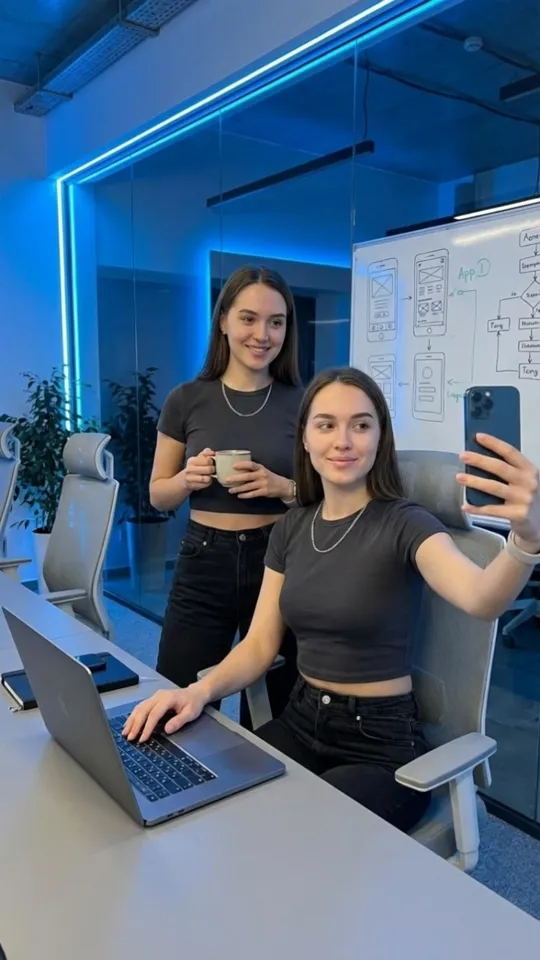
Human realism (9.0 vs 5.5): The biggest quality gap in our benchmarks. Kling's facial expressions, lip sync, skin textures, and eye movement look dramatically more natural. LTX struggles with faces — stiff expressions, inconsistent features, and visible artifacts. For UGC-style talking heads, the difference is not subtle.
Motion pacing (8.5 vs 5.0): Body movement, gestures, and camera tracking are dramatically smoother on Kling. Fitness content, product demonstrations with hand motion, and any scene with complex human movement benefit substantially. LTX produces noticeable jitter and distortion in motion-heavy scenes.
Scene consistency (8.5 vs 6.5): Objects, people, and lighting stay stable throughout the clip on Kling. Multi-person scenes (podcasts, interviews) maintain identity and proportions. LTX can produce flickering, shifting, and inconsistent details.
Visual quality (8.0 vs 6.0): Sharper detail, more accurate colors, and more consistent lighting. The gap is visible on both product and people content, and is especially pronounced on close-ups and detail shots.
Where LTX 2.3 Pro Wins
Generation speed (9.0 vs 7.5): LTX is the fastest model in our benchmarks. Clips are ready significantly sooner. In a rapid iteration session — testing dozens of product concepts, angles, and compositions — the speed advantage is substantial.
Cost efficiency (8.5 vs 7.0): At 5 credits per second vs Kling's 9, LTX costs nearly half. For fifty 6-second clips per week: LTX costs 1,500 credits, Kling costs 2,700 credits. That 1,200 credit difference buys another 40 clips on LTX — significant for volume testing strategies.
Product-focused content at scale: For ads where no people appear — supplement bottles, food platters, fashion flat-lays — Kling still leads on product shots (8.0 vs 6.5). But at high volume, LTX's speed and cost advantages outweigh Kling's quality edge for testing purposes. Find winners with LTX, produce them with Kling.
Pricing Comparison
| Metric | Kling O3 | LTX 2.3 Pro |
|---|---|---|
| Cost per second | 9 credits | 5 credits |
| 6-second clip | 54 credits | 30 credits |
| 10 clips | 540 credits | 300 credits |
| 50 clips | 2,700 credits | 1,500 credits |
Kling costs 80% more per clip. At 50 clips per week, the gap is 1,200 credits. For people-focused ads, Kling's quality justifies the premium — the human realism gap is too large to ignore. For product-only ads at scale, LTX's cost advantage lets you test significantly more variations within the same budget.
Frequently Asked Questions
Is Kling O3 better than LTX 2.3 Pro?
Yes, substantially. Kling O3 scores higher on every quality metric — human realism (9.0 vs 5.5), motion pacing (8.5 vs 5.0), scene consistency (8.5 vs 6.5), visual quality (8.0 vs 6.0), product shots (8.0 vs 6.5), and prompt accuracy (8.5 vs 7.0). LTX wins on speed (9.0 vs 7.5) and cost efficiency (8.5 vs 7.0). Total scores are 8.0 for Kling and 6.9 for LTX — Kling leads on our quality-weighted total as well as on every quality axis.
How do the total scores compare?
Kling leads at 8.0 vs LTX's 6.9 under our quality-weighted scoring (70% quality, 20% cost, 10% speed). LTX's 9.0 speed and 8.5 cost efficiency cannot close the quality gap when Kling averages 8.4 vs LTX's 6.1. For workflows where speed and cost dominate the decision — volume testing, discovery, budget constraints — LTX is still the right pick despite the lower total.
How much cheaper is LTX 2.3 Pro?
LTX costs 5 credits per second vs Kling's 9 — nearly half the price. For ten 6-second clips: LTX costs 300 credits, Kling costs 540 credits. At 50 clips per week: LTX costs 1,500 credits, Kling costs 2,700 credits. The savings are substantial at volume.
Can LTX 2.3 Pro do talking head videos?
Poorly. LTX scores 5.5 on human realism — the lowest in our benchmarks. Facial expressions look stiff, lip sync is inconsistent, and complex gestures break down. For talking heads, Kling O3 at 9.0 is in a completely different league. If your ads feature people, Kling is the only reasonable choice between these two.
Which model is faster?
LTX 2.3 Pro is significantly faster with a 9.0 speed score — the fastest in our benchmarks — vs Kling's 7.5. LTX delivers finished clips noticeably quicker. For rapid iteration sessions, the speed gap is substantial.
Can I use both models together?
Yes — this is a strong combination. Use LTX for rapid concept testing on product-focused content where its speed and cost advantage shine. Use Kling for all people-focused segments where its human realism advantage is decisive. Different APIs (Lightricks vs Kuaishou), but similar prompt formats.
Which model for TikTok ads?
Depends entirely on the format. For UGC-style talking heads — the dominant TikTok format — Kling O3 is the clear winner (9.0 human realism). For product-focused TikTok ads where speed of creative testing matters most, LTX lets you iterate faster and cheaper. Both output 9:16 vertical video natively.
Kling O3 vs LTX 2.3 Pro — which should I start with?
If your ads feature people, start with Kling — there is no substitute for its 9.0 human realism. If your ads are product-focused, start with LTX to find winning concepts fast and cheap. Many advertisers end up using both: LTX for product shots and testing, Kling for people-focused hero creatives.
More Model Comparisons
Head-to-head comparisons of AI video models for ad production.
Veo 3.1 Lite vs Kling O3
Budget speed vs human realism. Scores, videos, and use-case verdicts.
Veo 3.1 Lite vs Veo 3.1 Fast
Same Google ecosystem, different trade-offs. Quality vs cost and speed.
Veo 3.1 Lite vs LTX 2.3 Pro
The two most affordable AI video models compared head-to-head.
Veo 3.1 Fast vs Kling O3
Two premium models — photorealism vs human realism.
Veo 3.1 Fast vs LTX 2.3 Pro
Premium quality vs budget speed. Opposite trade-offs for ad production.
Seedance 2.0 Fast vs Kling O3
Motion physics vs human realism. Two top-tier models with opposite strengths.
Seedance 2.0 Fast vs Veo 3.1 Fast
10 vs 11 credits — ByteDance's motion vs Google's faces at the premium tier.
Seedance 2.0 Fast vs LTX 2.3 Pro
Premium quality vs budget speed. The widest quality gap in our video lineup.
Seedance 2.0 Fast vs Veo 3.1 Lite
Premium quality vs budget volume. Opposite trade-offs for different production phases.
Nano Banana Pro vs Nano Banana 2
Google's two AI image models — premium quality vs fast generation.
Nano Banana Pro vs Seedream v4.5
Premium Google quality vs ByteDance budget value.
Nano Banana 2 vs Seedream v4.5
Two budget image models — speed vs cost.

GPT Image 2 vs Nano Banana Pro
The two top-scoring premium image models — perfect text vs polished composition.
GPT Image 2 vs Nano Banana 2
Same 6-credit price — quality leader vs speed leader.
GPT Image 2 vs Seedream v4.5
The highest-scoring image model vs the cheapest — hero creatives vs catalog scale.